And What to Look for When Choosing One
Customer communication has changed dramatically over the past decade.
Not long ago, sending an SMS notification or promotional campaign was enough to keep customers informed and engaged. Today, people expect businesses to communicate through the channel that is most convenient for them, whether that’s SMS, RCS, WhatsApp, Viber, Telegram, email, or another messaging application. More importantly, they expect those conversations to be relevant, personalized, immediate, and consistent across every touchpoint.
For businesses, messaging has evolved from a simple communication channel into a critical part of the customer experience. Every order confirmation, authentication code, appointment reminder, payment notification, customer support interaction, and marketing campaign influences how customers perceive a brand.
For telecom operators, CPaaS providers, messaging aggregators, and enterprises, this shift represents more than changing customer expectations. It represents an opportunity to create entirely new communication services, strengthen customer relationships, and unlock new revenue streams.
At the same time, expectations continue to rise.
Businesses no longer want disconnected messaging tools for different channels. They need a single platform capable of orchestrating communication across the entire customer journey. They expect automation instead of manual processes, intelligent conversations instead of one-way notifications, seamless integrations with existing business systems, and AI-powered workflows that improve efficiency without increasing operational complexity.
Meeting these expectations requires far more than adding another messaging channel.
It requires an enterprise messaging platform designed to unify communication, automate customer engagement, and evolve alongside changing technologies.
With more than 25 years of messaging technology development, HORISEN has witnessed this transformation firsthand. Throughout that time, HORISEN Business Messenger has continuously evolved from a messaging platform into a carrier-grade enterprise communication solution that combines omnichannel messaging, CPaaS capabilities, automation, conversational AI, and API-first integration within a single, vendor-neutral environment. As part of the complete HORISEN Messaging Ecosystem, it enables telecom operators, CPaaS providers, and enterprises to build, manage, and scale modern communication services while maintaining complete flexibility and control.
So why are more businesses investing in enterprise messaging platforms in 2026?
Because business messaging itself is changing.
Customer communication is becoming more conversational, more automated, and increasingly connected to the systems and processes behind every interaction. At the same time, telecom operators and messaging providers are looking for new ways to turn these capabilities into services and revenue opportunities of their own.
Choosing the right platform therefore requires looking beyond individual channels or feature lists. Organizations need to consider how messaging is evolving, which capabilities will matter to their business, and whether the technology they invest in today can support where their communication strategy is heading next.
With that in mind, here are ten key considerations when investing in an enterprise messaging platform in 2026.
- Why Is Omnichannel Communication Becoming the New Standard?
Customers don’t think in communication channels.
They simply expect businesses to remember who they are and continue the conversation wherever they choose to engage.
A customer might begin interacting with a business through WhatsApp, receive a delivery update via SMS, continue the conversation through RCS, and later receive a promotional offer by email. To the customer, this feels like one continuous conversation.
To many businesses, however, these interactions are still managed through separate systems.
This fragmentation creates inconsistent customer experiences, duplicated work, disconnected reporting, and unnecessary operational complexity.
A modern enterprise messaging platform eliminates these silos by bringing every communication channel into one centralized environment.
HORISEN Business Messenger enables organizations to orchestrate communication across SMS, RCS, WhatsApp, Viber, Telegram, Facebook Messenger, Instagram, Email, and Web Push from a single platform. Rather than treating each channel independently, it provides one interface, one reporting environment, one automation engine, and one communication strategy across the entire customer journey.
The result is more consistent customer experiences, simpler operations, and greater flexibility as customer preferences continue to evolve.
- Why Are Businesses Replacing One-Way Messaging with Conversations?
Modern customers don’t simply want information. They expect interaction.
Traditional business messaging focused on broadcasting notifications and marketing campaigns. Today’s customers expect to ask questions, receive immediate responses, complete purchases, resolve problems, and continue conversations without switching channels.
This shift toward conversational messaging is transforming enterprise communication.
Instead of treating messaging as a notification tool, organizations are increasingly using it as a complete customer engagement channel.
HORISEN Business Messenger was designed with this evolution in mind. Through support for rich messaging channels, conversational workflows, interactive experiences, and two-way communication, businesses can create meaningful customer journeys instead of isolated message exchanges. Whether customers are confirming appointments, purchasing tickets, responding to campaigns, or communicating with support teams, conversations become part of a seamless digital experience rather than disconnected transactions.
As customer expectations continue to evolve, businesses that invest in conversational engagement will be better positioned to build stronger relationships and higher long-term customer value.
- How Does Automation Improve Customer Communication?
As organizations grow, communication becomes increasingly difficult to manage manually.
Customers expect immediate responses. Notifications must be sent at exactly the right moment. Marketing campaigns need personalization. Transactional messages depend on real-time business events.
Trying to coordinate these interactions manually is inefficient, error-prone, and impossible to scale.
Automation changes that completely.
Rather than asking employees to trigger every communication, modern enterprise messaging platforms automatically initiate conversations based on customer behaviour, business events, predefined rules, or external system triggers.
HORISEN Business Messenger provides this capability through trigger-based campaigns and its powerful App Flow Engine, a visual no-code environment that allows organizations to design sophisticated communication journeys without extensive development effort. Businesses can automate customer onboarding, appointment reminders, delivery notifications, payment confirmations, customer support interactions, and countless other communication scenarios while integrating external systems directly into the workflow.
Instead of building isolated campaigns, businesses create intelligent communication processes that scale automatically alongside their growth.
- How Is AI Transforming Enterprise Messaging?
Artificial intelligence is rapidly changing how businesses communicate with their customers.
Not long ago, automation meant sending predefined messages based on simple rules. Today, businesses expect messaging platforms to understand context, assist customers, personalize interactions, and resolve common requests without human intervention.
The goal is no longer simply to automate communication. It is to make communication more intelligent.
AI-powered messaging enables organizations to provide faster responses, deliver more relevant information, reduce support workloads, and create customer experiences that feel both immediate and personal.
However, AI creates value only when it is integrated into business processes rather than operating as a standalone chatbot.
HORISEN Business Messenger incorporates AI directly into communication workflows through AI Nodes within the App Flow Engine. Businesses can build intelligent communication journeys that combine automation with contextual decision-making, enabling virtual assistants to answer questions, guide customers through complex processes, and maintain real-time conversations across multiple messaging channels.
This transforms messaging from a one-way delivery mechanism into an intelligent engagement platform that continuously improves customer experience while reducing operational effort.
For organizations investing in customer service, sales automation, or digital engagement, AI is no longer an optional enhancement – it is becoming a core capability of modern enterprise messaging.
- Why Should an Enterprise Messaging Platform Integrate with Your Existing Business Systems?
Communication should never exist in isolation.
Every customer interaction depends on data stored somewhere else – whether in a CRM, ERP system, e-commerce platform, billing application, customer portal, or internal database.
Without integration, businesses are forced to duplicate work, manually synchronize information, and switch between multiple systems just to complete a single customer interaction.
This slows operations, increases the risk of errors, and limits the ability to deliver personalized communication.
A modern enterprise messaging platform should function as an extension of the business itself, embedding communication directly into operational processes rather than operating alongside them.
Built on a fully API-first architecture, HORISEN Business Messenger integrates seamlessly with CRM, ERP, POS systems, customer support applications, and virtually any external software environment. Dedicated APIs – including Conversation, Campaign, Contact, and Inbound APIs – allow organizations to synchronize customer data in real time, trigger communication automatically, and embed messaging into existing digital workflows.
Instead of becoming another disconnected application, the platform becomes an integrated communication layer that connects people, processes, and systems across the enterprise.
- Why Are Telecom Operators Investing in CPaaS?
Enterprise messaging is no longer simply about delivering SMS traffic.
Telecom operators are increasingly looking beyond traditional messaging services to create higher-value offerings that strengthen customer relationships and generate new revenue streams.
This is exactly where Communications Platform as a Service (CPaaS) has become one of the fastest-growing areas of the messaging industry.
Rather than selling connectivity alone, operators can provide enterprises with complete communication platforms that integrate messaging directly into business applications, automate customer engagement, and support omnichannel communication.
For many operators, CPaaS represents a natural evolution from infrastructure provider to strategic technology partner.
HORISEN Business Messenger was designed with this transformation in mind.
As a fully APIfied, white-label, vendor-neutral CPaaS platform, it enables telecom operators, messaging providers, and aggregators to launch their own enterprise messaging services under their own brand while maintaining complete control over customer relationships, infrastructure, and commercial models. Multi-tenancy support, flexible deployment, and extensive integration capabilities allow providers to scale their CPaaS business without rebuilding existing infrastructure.
Instead of competing solely on message delivery, operators can deliver higher-margin communication services that create long-term value for enterprise customers.
As customer expectations continue to evolve, CPaaS is becoming less of an innovation and more of a business necessity.
- Why Does Vendor Neutrality Matter More Than Ever?
Choosing an enterprise messaging platform is not only about features.
It is also about choosing the right technology partner.
Many communication platforms are developed by companies whose primary business is selling messaging traffic or communication services. While this model may work for some organizations, it can also create commercial conflicts when software providers compete directly with their own customers.
For telecom operators and messaging providers, maintaining strategic independence has become increasingly important.
Vendor-neutral platforms remove this conflict.
They allow businesses to choose their preferred network partners, commercial relationships, routing strategies, and infrastructure providers without being constrained by the software vendor’s business interests.
This philosophy has guided HORISEN for more than 25 years.
As a pure product software house, HORISEN focuses exclusively on developing messaging technology rather than competing for messaging traffic. Every investment is directed toward research, engineering, and continuous product innovation, allowing customers to build their communication business on an independent technology foundation designed for long-term growth.
For organizations making long-term technology investments, vendor neutrality is no longer simply a purchasing preference.
It is a strategic advantage that protects flexibility, preserves commercial independence, and ensures that the platform continues evolving around customer needs rather than competing priorities.
- Business Growth: How Can an Enterprise Messaging Platform Create New Revenue Opportunities?
Enterprise messaging is no longer simply a communication tool.
It has become a business model.
As organizations look for new ways to strengthen customer engagement and differentiate their services, messaging is increasingly evolving into a revenue-generating capability rather than an operational necessity. Telecom operators are expanding beyond traditional message termination by offering value-added communication services, while enterprises are using messaging to increase conversions, improve customer retention, and streamline digital interactions.
A modern enterprise messaging platform should support both objectives.
HORISEN Business Messenger enables telecom operators, CPaaS providers, and messaging aggregators to launch and monetize enterprise messaging services through a white-label, multi-tenant architecture that gives them complete control over branding, customer relationships, and commercial models. At the same time, enterprises can create new business value by delivering automated customer journeys, conversational commerce, interactive campaigns, and personalized communication across multiple channels.
Instead of viewing messaging as a cost centre, organizations can transform it into a strategic growth engine that delivers measurable business value.
- Future-Ready Architecture: Why Should Your Enterprise Messaging Platform Be Part of a Complete Messaging Ecosystem?
Choosing an enterprise messaging platform is rarely a decision for today alone.
The platform selected today should continue supporting new communication channels, evolving customer expectations, and future business requirements for years to come.
Unfortunately, many messaging solutions are designed as standalone products. As organizations grow, they often need to replace existing software or integrate multiple disconnected tools simply to support new services.
A future-ready platform takes a different approach.
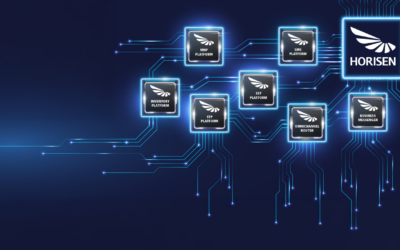
As part of the HORISEN Messaging Ecosystem, Business Messenger integrates seamlessly with complementary technologies including the HORISEN SMS Platform, SS7 Platform, STP Platform, MNP Platform and Lookup Service, Inventory Platform, Omnichannel Router, SCCP Signalling, and Virtual Long Number Service. This modular architecture allows businesses to expand their messaging capabilities gradually while maintaining one connected technology environment rather than introducing additional operational complexity.
Technology will continue to evolve.
A messaging platform should make adapting to that change easier – not require another migration every few years.
- Choosing the Right Platform: What Should You Look for in an Enterprise Messaging Platform?
The best enterprise messaging platform is rarely the one with the longest feature list.
It is the one that supports your business strategy.
Before making an investment, organizations should ask themselves:
- Does the platform support true omnichannel communication?
- Can it automate customer journeys without extensive development?
- Does it integrate easily with our existing systems?
- Can it support AI-driven customer interactions?
- Is it designed for enterprise-scale performance?
- Does it enable us to launch new communication services?
- Is the vendor truly independent?
- Can the platform evolve as our business grows?
- Does it fit into a broader messaging ecosystem?
- Will it still meet our requirements five years from now?
These questions shift the conversation away from individual features and toward long-term business value.
Built on more than 25 years of messaging expertise, HORISEN Business Messenger was designed around these very principles. Combining omnichannel communication, automation, AI, API-first integration, CPaaS capabilities, and vendor neutrality within a single platform, it provides organizations with a flexible technology foundation that grows alongside their business rather than limiting it.
The Future of Enterprise Communication Belongs to Businesses That Invest in Intelligent Messaging
Enterprise messaging has evolved far beyond sending notifications.
Today, it connects people, systems, and business processes through intelligent, automated, and personalized communication. As customer expectations continue to rise and digital interactions become increasingly complex, organizations need more than individual messaging channels – they need a platform capable of orchestrating every conversation across the customer lifecycle.
For telecom operators, that means creating new revenue opportunities through CPaaS and value-added communication services.
For enterprises, it means delivering more engaging customer experiences while improving operational efficiency.
For messaging providers, it means building communication services that can evolve alongside changing technologies and customer expectations.
Investing in an enterprise messaging platform is therefore no longer simply an IT decision.
It is a strategic investment in how your organization communicates, competes, and grows.
With its carrier-grade architecture, omnichannel capabilities, API-first design, AI-powered automation, vendor-neutral philosophy, and seamless integration into the broader HORISEN Messaging Ecosystem, HORISEN Business Messenger provides organizations with a future-ready platform for building the next generation of enterprise communication.