And Why One API Is Replacing Multiple Messaging Integrations
Customer communication has never been more fragmented.
Today, businesses are expected to communicate through SMS, RCS, WhatsApp, Telegram, Email, Facebook Messenger, Instagram, and the next channel that will inevitably emerge tomorrow. Customers simply choose the channel they prefer.
For technology teams, however, every additional channel introduces new APIs, different protocols, separate authentication methods, unique message formats, individual webhooks, testing environments, and ongoing maintenance.
The result is growing technical complexity.
Instead of building communication services, developers spend increasing amounts of time integrating, maintaining, and updating multiple messaging platforms.
The challenge is no longer connecting to one communication channel.
It is managing them all efficiently.
An Omnichannel Router solves this problem by introducing a single orchestration layer between business applications and every messaging channel. Rather than integrating each channel individually, applications communicate with one unified API while the router intelligently selects the appropriate channel, manages routing logic, performs automatic fallback, and maintains consistent communication across the entire messaging ecosystem.
With more than 25 years of messaging technology development, HORISEN designed its Omnichannel Router to simplify exactly this challenge. Acting as a centralized routing and orchestration layer, it unifies SMS, RCS, WhatsApp, Telegram, Email, Facebook Messenger, Instagram, and additional messaging channels through one API while providing intelligent routing, built-in fallback logic, centralized management, unified message logging, and delivery visibility, and seamless interoperability with the complete HORISEN Messaging Ecosystem. Available both as a cloud-based and on-premise deployment, it enables businesses to simplify integrations today while remaining ready for tomorrow’s communication channels.
So why are more telecom operators, CPaaS providers, software vendors, and enterprises investing in Omnichannel Routers in 2026?
Because the right platform reduces integration complexity, accelerates time-to-market, improves delivery reliability, simplifies maintenance, and future-proofs messaging infrastructure through one intelligent routing layer.
The following ten questions highlight the key capabilities and strategic advantages to consider when choosing an Omnichannel Router.
- Why Is API Standardization Essential for Modern Communication?
Every messaging provider has its own APIs, authentication methods, payload structures, delivery reports, and integration requirements.
Without a common interface, every new communication channel increases development effort and makes applications more difficult to maintain over time.
A modern Omnichannel Router standardizes these differences behind a single communication interface. Instead of adapting applications to every messaging provider, developers integrate once while the router handles channel-specific complexity behind the scenes.
HORISEN Omnichannel Router provides a unified RESTful API for SMS, RCS, WhatsApp, Telegram, Email, Facebook Messenger, Instagram, and additional messaging channels. As new technologies become available, organizations can adopt them without redesigning their applications or rebuilding existing integrations.
Standardizing communication architecture today makes future innovation significantly easier.
- Why Is Intelligent Channel Routing Becoming Essential?
Choosing the right communication channel is no longer a simple decision.
Some customers prefer SMS. Others respond better to WhatsApp. Some markets have stronger RCS adoption. Others rely on email or social messaging.
Using the same channel for every interaction often leads to unnecessary costs, lower engagement, and missed opportunities.
A modern Omnichannel Router introduces intelligence into the routing process by allowing each message to use a selected primary channel with predefined fallback channels ready if delivery fails.
HORISEN Omnichannel Router enables organizations to select the preferred channel for each message and define an ordered fallback cascade across alternative channels. If delivery through the primary channel fails, the router automatically continues through the next configured channel without requiring changes to the application, simplifying application logic while improving delivery resilience.
The best communication strategy is rarely about using one channel.
It is about using the right one.
- Why Does Automatic Fallback Improve Delivery Reliability?
Customers don’t care which channel delivers the message.
They simply expect it to arrive.
Unfortunately, every communication channel has moments when delivery is delayed, unavailable, or unsupported.
Without fallback mechanisms, failed deliveries often require manual intervention or remain unnoticed altogether.
An Omnichannel Router removes this risk by automatically redirecting communication to alternative channels whenever predefined conditions are met.
HORISEN Omnichannel Router supports configurable fallback scenarios that allow organizations to maintain business continuity across multiple communication channels. If one channel becomes unavailable or unsuitable, messages can automatically continue through another channel without requiring application changes or manual intervention.
Reliable communication is not about preventing every failure.
It is about ensuring failures never interrupt the customer experience.
- Why Does Centralized Communication Simplify Operations?
As organizations adopt more messaging channels, operational visibility often decreases.
Different dashboards. Different reporting tools. Different monitoring systems. Different APIs.
Instead of simplifying communication, additional channels frequently create additional complexity.
A centralized Omnichannel Router brings every communication flow together into one operational environment.
HORISEN Omnichannel Router provides centralized management for message routing and channel configuration, together with a unified message log and delivery visibility across all supported messaging channels. This gives technical and operational teams one place to manage communication infrastructure instead of maintaining separate environments for every provider and channel.
One operational view creates faster decisions and simpler management.
- Why Does Faster Channel Adoption Create a Competitive Advantage?
Launching a new communication channel should not become a development project.
Yet many organizations spend weeks – or even months – building, testing, and maintaining new integrations whenever they introduce another messaging service.
This slows innovation and delays new customer offerings.
By abstracting channel-specific complexity behind one unified API, an Omnichannel Router dramatically reduces development effort.
Applications integrate once.
The router handles the rest.
HORISEN Omnichannel Router allows organizations to add new messaging channels without redesigning their applications or changing existing business logic. As communication technologies evolve, businesses can expand their services significantly faster while protecting previous development investments.
Faster integrations mean faster innovation.
- Why Is Vendor Independence More Important Than Ever?
Communication channels evolve constantly.
New providers emerge. Commercial agreements change. Customer preferences shift.
Businesses that tightly couple their applications to individual messaging vendors often find themselves locked into costly migrations whenever requirements change.
A modern Omnichannel Router protects organizations from this dependency.
By separating business applications from channel-specific implementations, it gives organizations the flexibility to introduce new providers, replace existing ones, or expand communication capabilities without disrupting the applications that rely on them.
HORISEN Omnichannel Router follows the company’s long-standing vendor-neutral philosophy, allowing businesses to retain complete control over their commercial relationships while avoiding technology lock-in. Applications remain connected to one stable interface while the underlying communication infrastructure continues to evolve.
Technology should give businesses more choices—not fewer.
- Why Is API-First Architecture the Foundation of Modern Communication?
Modern communication extends far beyond messaging applications.
CRM systems. ERP software. Customer portals. Mobile applications. Web platforms. AI assistants. Business workflows.
All require seamless access to communication services.
An API-first architecture allows messaging to become part of wider business processes instead of operating as an isolated communication tool.
Built on an API-first architecture, HORISEN Omnichannel Router enables organizations to embed messaging capabilities directly into existing business systems while exposing one consistent communication interface for developers. This simplifies automation, accelerates system integration, and allows messaging to become a natural part of digital business workflows.
The more easily communication integrates with business systems, the more value it creates across the organization.
- Why Should Your Omnichannel Router Be Part of a Complete Messaging Ecosystem?
Sending messages is only one part of operating a successful messaging business.
Every communication workflow depends on routing, messaging infrastructure, signalling, number portability, inventory management, customer engagement, and commercial operations working together.
When these capabilities operate independently, organizations introduce unnecessary integrations, duplicate operational processes, and lose visibility across the customer journey.
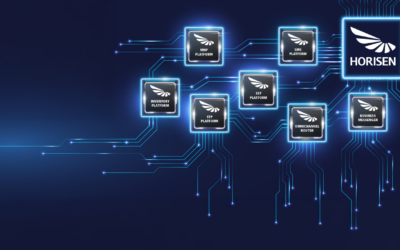
As part of the HORISEN Messaging Ecosystem, HORISEN Omnichannel Router integrates seamlessly with the SMS Platform, Business Messenger, SS7 Platform, STP Platform, MNP Platform, Inventory Platform, SCCP Signalling, and Virtual Long Number Service. This modular architecture allows communication, routing, signalling, and commercial processes to operate as one connected environment while enabling businesses to expand their capabilities without disrupting existing operations.
The greatest value comes from connecting every part of the messaging business – not just every communication channel.
- How Do You Future-Proof Your Communication Architecture?
Messaging technology continues to evolve.
Yesterday it was SMS.
Today it includes RCS, WhatsApp, Telegram, and social messaging.
Tomorrow it will include new communication channels that have yet to emerge.
Businesses should not need to redesign their applications every time the market changes.
A future-ready Omnichannel Router allows organizations to adopt new channels while preserving existing integrations and business logic.
HORISEN continuously evolves the Omnichannel Router to support new messaging technologies, ensuring customers can expand their communication capabilities without rebuilding their infrastructure. This protects long-term technology investments while allowing businesses to adapt quickly to changing customer expectations.
Future-proof architecture is designed to embrace change – not resist it.
- How Do You Choose the Right Omnichannel Router in 2026?
The best Omnichannel Router is not simply the one that supports the largest number of communication channels.
It is the one that simplifies your entire communication architecture.
When evaluating an Omnichannel Router, organizations should ask:
- Does it provide one unified API for every communication channel?
- Can it support per-message channel selection and automatic fallback between channels?
- Does it support automatic fallback between channels?
- Will it reduce development and maintenance effort?
- Can it integrate seamlessly with existing business systems?
- Is it built for carrier-grade scalability and reliability?
- Does it support cloud and on-premise deployments?
- Is the vendor independent and continuously innovating?
- Can it evolve as new communication channels emerge?
- Will it simplify operations while supporting long-term business growth?
These questions move the conversation beyond channel connectivity and toward strategic technology architecture.
Built on more than 25 years of messaging expertise, HORISEN Omnichannel Router combines unified API integration, intelligent routing, automatic fallback, carrier-grade performance, API-first design, and seamless interoperability within the HORISEN Messaging Ecosystem. It enables telecom operators, CPaaS providers, software vendors, and enterprises to simplify communication infrastructure while preparing for the future of omnichannel messaging.
The Future of Communication Is Intelligent Orchestration
The future of customer communication is not about supporting more channels.
It is about managing them intelligently.
As communication ecosystems continue to expand, organizations need technology that simplifies integration, accelerates innovation, improves operational efficiency, and adapts to new messaging channels without constant redevelopment.
An Omnichannel Router provides that foundation by separating business applications from channel-specific complexity while creating a flexible orchestration layer for modern communications.
With its unified API, intelligent routing engine, automatic fallback capabilities, carrier-grade architecture, and seamless integration into the HORISEN Messaging Ecosystem, HORISEN Omnichannel Router enables telecom operators, CPaaS providers, software vendors, and enterprises to build communication infrastructure that is ready not only for today’s channels, but for whatever comes next.