CEO perspective
A few weeks ago, I wrote that after more than 25 years in telecommunications, the real value of industry events has very little to do with the exhibition itself.
It has everything to do with the people.
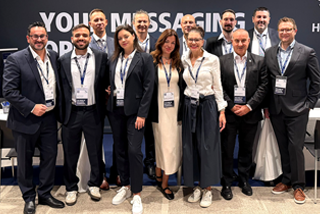
After spending the past few days at BATIC in Bali, I found myself thinking about that again – but from a slightly different perspective.
Because sometimes the people you meet don’t just introduce you to a new company, a new idea or a new business opportunity.
They introduce you to a part of the world you might otherwise never really get to know.
Bali is more than 11,000 kilometres from Switzerland. Indonesia has its own traditions, ways of communicating, social customs and perspectives shaped by a history and culture very different from the one I grew up with.
And yet, a few days ago, I found myself right in the middle of it.
Not as a tourist observing from a distance, but surrounded by people from Indonesia and many other parts of Asia, Europe and the rest of the world. Talking. Eating together. Wearing batik. Exchanging ideas. Laughing. Doing business. And, perhaps most importantly, learning a little more about one another.
It reminded me of something I sometimes take for granted after so many years in telecommunications.
This industry has given me a passport to cultures I might otherwise never have encountered.
When Distance Becomes Personal
We often describe telecommunications in very technical terms.
Networks connect countries. Messages cross borders. Infrastructure reduces distance. Technology makes global communication possible.
All of that is true.
But there is another consequence that is much harder to put into a specification sheet.
Telecommunications brings people together who might otherwise have had very little reason or opportunity to meet.
I have spent much of my professional life working with people from different countries and cultures. And every time I travel to places that are geographically and culturally further away from my own, I am reminded how valuable that privilege is.
There is something very different about knowing that another culture exists and actually spending time among the people who live it.
Research in cross-cultural psychology gives us an interesting explanation for why.
Culture is not simply food, clothing, language or tradition. It influences how we communicate, how we interpret behaviour, how we express emotion, how we relate to groups and even how we perceive situations around us.
That means meeting another culture is not just about discovering that people do things differently.
It is an opportunity to discover that there are different ways of seeing the same world.
Different Does Not Mean Distant
Perhaps this is what I enjoy most about international telecommunications events.
At first, you notice the differences.
The greetings may be different. Business etiquette may be different. Communication can be more direct in one culture and more contextual in another. Attitudes towards hierarchy, relationships, hospitality or negotiation may differ as well.
Cross-cultural research offers an interesting perspective on why some of these interactions can feel different. Anthropologist Edward T. Hall, for example, explored how culture influences communication, including how much meaning is expressed directly through words and how much depends on context, relationships and non-verbal communication.
I find that particularly interesting in an industry like ours. We spend our careers communicating, negotiating and building relationships across borders, often without thinking about how differently the same interaction might be understood by the person sitting across the table.
This framework is definitely not a formula for understanding individuals. But it reminds us of something valuable: what feels completely normal to us is not necessarily universal.
And that realization can make us more curious.
But something interesting happens when you spend enough time together. After initially noticing the differences, you begin noticing the similarities. Everyone wants to be respected. Everyone appreciates genuine interest. People want to build relationships with people they trust. And laughter seems to require surprisingly little translation.
That is also one of the most interesting ideas behind cross-cultural psychology: understanding cultures is not only about identifying what separates us. Researchers are equally interested in what we share across those differences.
Maybe that is why being part of such an international environment feels so energizing.
You are surrounded by difference without necessarily feeling divided by it.
You Cannot Experience a Culture Through a Screen
Technology has made it possible for us to communicate across practically any distance.
I can speak to someone in Indonesia from my office in Switzerland. Teams can collaborate across continents. Business relationships can develop for years without people ever occupying the same room.
Our own industry has helped make that normal.
And I am very grateful for that.
But there is a beautiful paradox here.
The better technology becomes at connecting us across distance, the more I appreciate the moments when those connections bring us into the same room.
A video call can introduce you to a person. It cannot completely introduce you to their culture. For that, sometimes you have to travel.
You have to sit at their table. See how people interact. Experience their hospitality. Hear the language around you. Ask questions. Occasionally misunderstand something. Learn.
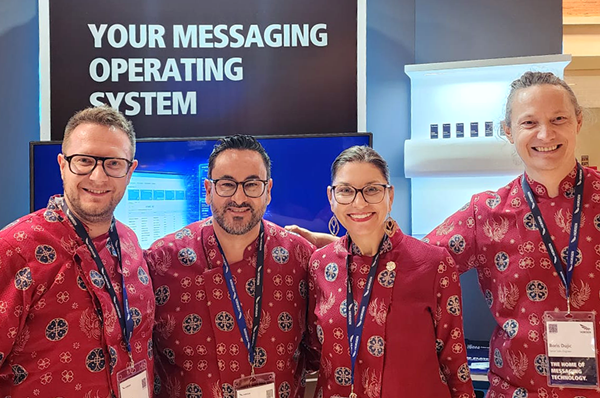
Even something as simple as wearing batik attire during BATIC became part of that experience for me.
It was a small gesture from the organizers, but I appreciated it enormously because it invited us not only to attend an international conference in Indonesia, but to engage, even briefly, with something belonging to Indonesian culture.
These moments stay with you.
The Industry That Made My World Bigger
I entered telecommunications because I was fascinated by technology and business.
I don’t think I realized at the beginning how much it would expand my world in another sense.
Over the years, this industry has taken me into rooms filled with nationalities, languages, traditions and perspectives that I would have struggled to encounter in my everyday life.
Particularly when Europe is your starting point, distance matters. Asia is far away. Latin America is far away. Many cultures cannot simply become part of your everyday experience unless something brings your worlds together.
For me, telecommunications has been that something.
And the interesting thing is that the more cultures I encounter, the less interested I become in deciding which way of doing something is the “right” one.
I become more curious about why.
Why is business conducted this way here? Why does this gesture matter? Why is this form of communication preferred? Why does something that feels completely natural to me look different somewhere else? Curiosity is a much better starting point than assumption. And perhaps that matters especially in a global industry like ours.
Connecting the World Should Also Mean Understanding It
We like to say that telecommunications connects the world.
After Bali, I think I appreciate that statement even more.
Our industry has made distance increasingly irrelevant to the way people communicate and do business. Every day, networks and technologies connect people who may be thousands of kilometres apart, allowing relationships to begin and develop across borders, languages and cultures.
Working in telecommunications has allowed me to experience the other side of that connection as well.
It has given me a reason to cross those kilometres, meet the people behind the calls, messages and business relationships, and experience something of the cultures they come from.
And Bali will certainly not be the last opportunity this year.
Over the coming months, our travels will take us from Spain to Oman and Argentina, and to other places, each with its own culture, customs and ways of communicating.
Perhaps I will experience those places a little differently now.
I know I will probably pay more attention to how relationships are built, how people communicate, how much is said directly and how much is understood through context. To the differences that are immediately visible – and those you only begin to notice once you spend time with people.
Not to put anyone into a cultural category. Quite the opposite.
The theories I explored here are useful because they give us different ways of looking at culture. But the interesting part begins when you meet the individual person behind them.
That is what I am looking forward to.
Telecommunications has made it possible for us to build relationships across extraordinary distances. And working in this industry has given me the privilege of crossing many of those distances myself.
Bali reminded me how much there still is to discover – and how much I still want to understand.
Fabrizio Salanitri
Founder & CEO, HORISEN