What Are You Really Choosing?
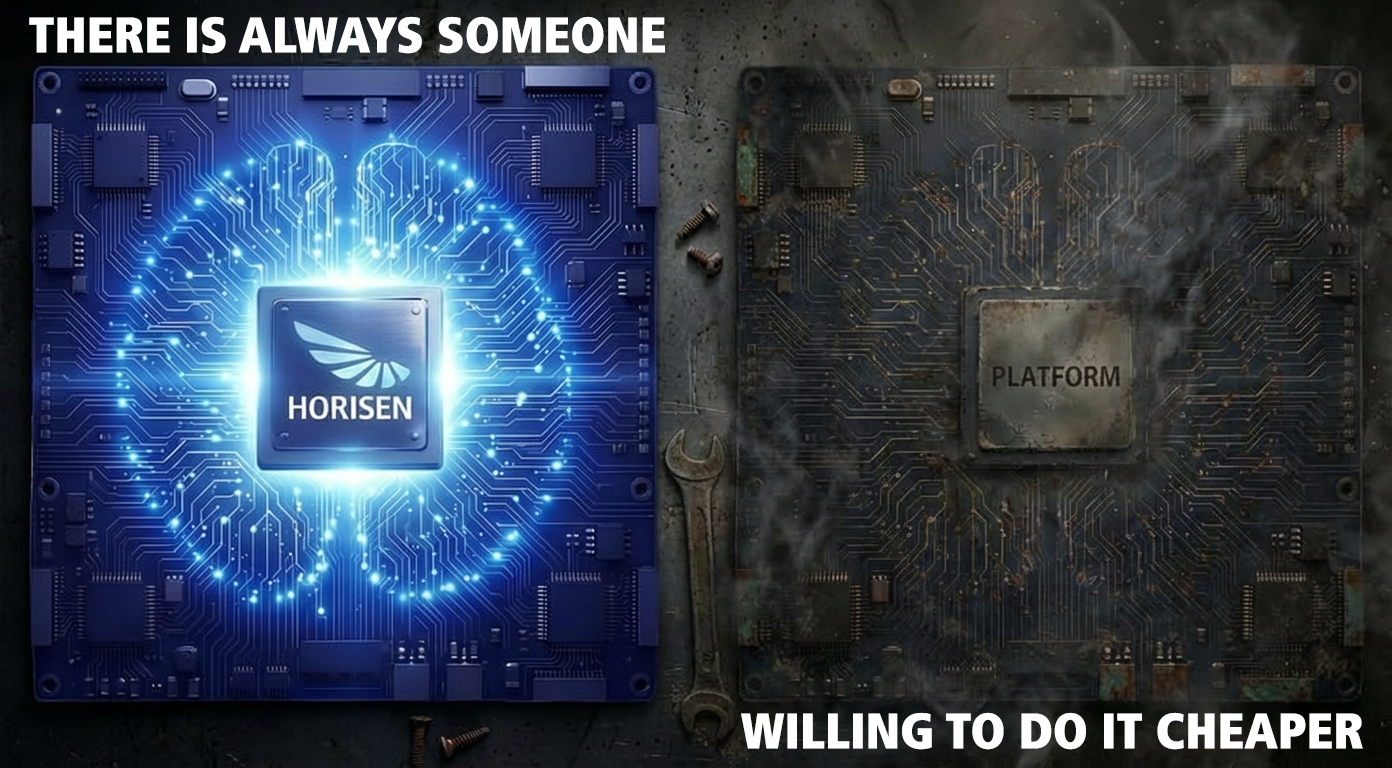
Let’s be honest: in any industry, price is always part of the conversation. The messaging industry is no exception. It has been this way for as long as messaging has existed. No matter the market, the technology, or the use case, there is almost always someone willing to do it cheaper.
In messaging, however, this dynamic has a particular weight. As an industry built on scale, margins, and high-volume infrastructure, decisions driven primarily by price tend to have consequences that only become visible over time.
The more important question is not whether cheaper options exist, but what choosing them means in the long run.
Previously, I touched on why maintaining an independent direction has been essential for us in a crowded and competitive industry. That independence is tested most clearly when decisions come down to price, and when cheaper options are always available. Understanding the long-term implications of those choices is worth a closer look.
The Illusion of the Lowest Price
On paper, a lower price is easy to understand. It simplifies decisions, fits neatly into procurement processes, and offers an immediate sense of efficiency. Especially in competitive environments, cost reduction can feel like progress.
But messaging is not a commodity in the traditional sense. It is infrastructure. It sits quietly in the background, expected to work reliably, securely, and predictably – regardless of volume, geography, or complexity.
When decisions are driven primarily by price, the trade-offs are rarely visible at the beginning. They tend to surface later, often under pressure:
- when traffic grows faster than expected
- when routing becomes more complex
- when support is needed urgently rather than eventually
- when “low cost” no longer aligns with business requirements
- when outages begin to impact growth and revenue
- when security vulnerabilities are exposed
By then, the real cost of “cheap” becomes harder to measure – and far more expensive to correct.
What Gets Optimized When Price Comes First
Every platform is optimized for something. If the primary goal is to be the cheapest option, other aspects inevitably become secondary.
Sometimes that means tighter margins that leave little room for reinvestment. Sometimes it means simplifying architecture at the expense of flexibility, robustness and scaling. Sometimes it means limiting transparency, control, or adaptability because they are harder to monetize.
None of this is necessarily wrong. It is simply a different optimization strategy.
The challenge arises when messaging is treated purely as a line item rather than as a foundation. Infrastructure optimized only for cost tends to struggle when conditions change – and in telecom, conditions always change.
Long-Term Thinking in a Short-Term Market
One of the hardest things to maintain in this industry is long-term thinking. Technology cycles move quickly, customer expectations evolve, and pressure to deliver immediate results is constant.
Choosing not to compete purely on price is rarely the easiest path. It requires patience, discipline, and a willingness to invest ahead of demand. It also requires accepting that not every opportunity is the right one.
As business demands grow, so do the requirements behind the scenes. Higher expectations inevitably require greater investment – in infrastructure, in security, and in the people needed to build, operate, and support these systems at scale.Over time, however, this approach creates a different kind of value. Systems built with longevity in mind are easier to adapt. Teams working on sustainable platforms are better equipped to respond to change. Customers who prioritize reliability and control tend to build more resilient businesses themselves.
What This Means for Messaging Providers and Their Customers
For messaging providers, the question is not how to be the cheapest today, but how to remain relevant tomorrow. That relevance depends on trust, stability, and the ability to evolve without disruption.
For customers, the question is not whether cost matters – it always does – but whether cost is the only factor that matters. The lowest price rarely tells the full story about scalability, transparency, support, or long-term risk.
In the end, messaging technology is not just about delivering messages. It is about enabling businesses to operate, grow, and depend on systems they do not need to think about every day.
Choosing Beyond Price
There will always be someone willing to do it cheaper. That will not change.
What does change is the understanding of what “cheaper” actually costs over time. In an industry where reliability is invisible until it fails, the real value often lies not in what is saved upfront, but in what is avoided later.
For us at HORISEN, this perspective has shaped how we build technology and how we work with customers. Not by rejecting competition, but by choosing a different optimization: long-term reliability over short-term advantage, control over convenience, and sustainability over speed.
It is not the loudest approach. But after 25 years, it has proven to be a durable one.As the saying goes: “The bitterness of poor quality remains long after the sweetness of low price is forgotten.” So, choose carefully – because buying cheap often means buying twice.
Fabrizio Salanitri
Founder & CEO, HORISEN