CEO Perspective
Last week at Mobile World Congress in Barcelona, the telecom and messaging ecosystem once again demonstrated how fast our industry evolves.
New announcements, new visions, new technologies – the pace of change is constant.
In an environment like this, the real challenge is not simply keeping up with every trend. The real challenge is maintaining your own direction.
The messaging industry is full of strong players, bold visions, and constant change. Over the years, many companies have grown through acquisitions, consolidation, or rapid shifts in strategy. That is neither good nor bad – it is simply the reality of a mature and highly competitive market.
From the very beginning, however, HORISEN followed a slightly different path.
Why Having Your Own Direction Matters
Technology companies often speak about innovation, scale, and disruption. These words are familiar to everyone in our industry. What matters more, in my experience, is how decisions are made when no one is watching, when growth is not linear, and when the easy option is not necessarily the right one.
Keeping our own direction has always meant being able to say “no” as often as “yes”. No to shortcuts that would compromise reliability. No to building technology purely to follow trends. No to decisions that might look attractive in the short term but weaken the foundation in the long run.
That direction is not about reacting to every new trend. It is about being consistent.
Independence as a Practical Choice
HORISEN has been independent from its foundation. Not as a statement, but as a practical reality that shaped how the company grew. Without external pressure to chase quarterly results or adjust strategy to fit someone else’s agenda, we were able to think in longer cycles.
This independence made it possible to:
- build platforms step by step instead of rushing to market
- invest in architecture and stability long before it was visible externally
- remain vendor-neutral in an industry where lock-in is often the default
- rebuild technology, when necessary, even if it was not the fastest route
None of this has guaranteed success. But it has created space to make deliberate decisions – and over time, those decisions add up.
Building Technology, Not Just Products
One difference I have always believed in is building technology, not just products. Products are snapshots in time. Technology is something that must survive constant pressure, growing traffic, changing regulations, and evolving customer needs.
That mindset led us to focus on modularity long before it became a buzzword. Instead of forcing everything into a single, rigid system, we built platforms that could stand on their own and still work together. This allows customers to grow at their own pace, integrate what they need, and remain in control of their ecosystem.
It is not the fastest way to scale. But it is a sustainable one.
Respect for the Market and for Different Approaches
There is no single “right” way to build a messaging business. Different companies serve different needs, markets, and audiences. Some focus on developer simplicity, others on global reach, others on vertical integration.
Our approach has always been shaped by close collaboration with operators, aggregators, and enterprises who depend on messaging as critical infrastructure. That responsibility naturally leads to a certain conservatism in the best sense of the word: reliability before novelty, transparency before abstraction, control before convenience.
Respecting the market also means understanding that competition pushes everyone to improve. It raises standards, encourages innovation, and ultimately benefits customers.
Why This Still Matters After 25 Years
After 25 years, keeping your own direction becomes even more important. Experience can easily turn into routine, and success can make companies less willing to question themselves. Independence helps prevent that. It allows us to remain curious, self-critical, and open to change c – without losing our identity.
HORISEN today is very different from HORISEN 25 years ago. The platforms are more powerful, the scale is global, and the industry is far more complex. What has not changed is the intention behind the technology: to simplify complexity and give customers control over their messaging business.
That intention continues to guide us.
In future posts, I will share more perspectives on technology, industry evolution, and the decisions that come with building software meant to last. Not to define how others should work, but to explain why we work the way we do.
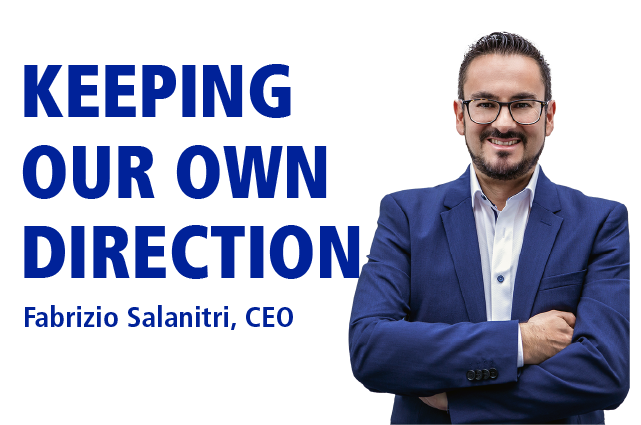
Fabrizio Salanitri
Founder & CEO, HORISEN